You don't need to be an artist to get a great tattoo.
You just need a real idea (even if it's messy), the right references, and a professional tattooer who knows how to translate what's in your head into something that actually works on skin.
At Southern Tattoo Society in San Antonio, Texas (7327 N Loop 1604 W #101A, San Antonio, TX 78249), our artists build custom pieces every day across styles like fine line, black & gray, Japanese traditional, neo-traditional, American traditional, and watercolor/color illustrative. With founder A.ONE bringing 23+ years of experience, we've seen what makes a design look good today and still read clean years from now.
This guide breaks down the full process tattoo artists use to turn client ideas into a custom tattoo you'll actually be proud to wear-whether it's your first piece or you've been collecting ink for years.
What you'll get out of this: a simple way to prepare for your consultation, what to expect from the design process, what tattoo professionals should look like in a San Antonio studio, and how to protect your results with proper aftercare.
Table of Contents
The Quick Answer: What Happens When You Bring a Custom Tattoo Idea In
Step 1: Turn Your Idea Into a Clear Design Brief
Step 2: Choose a Style That Matches the Idea (and Your Skin)
Step 3: Pick Placement That Helps the Custom Tattoo Age Well
Step 4: The Consultation-How Pros Pull the Real Story Out
Step 5: Drawing + Revisions-Where the Design Gets Built
Step 6: Stencil + Fit Check-Making It Work on Your Body
Safety and Professionalism: What a Legit Studio Does Differently
Aftercare: Protecting the Lines, Shading, and Color
FAQ: Common Custom Tattoo Design Questions
Book a Consultation in San Antonio
The Quick Answer: What Happens When You Bring a Custom Tattoo Idea In
When you bring an idea to a custom tattoo artist, the artist listens first and then translates your concept into a design that works on skin. That includes:
Clarity: What the tattoo is really about (the core meaning)
Structure: Layout, focal point, balance, and flow
Wearability: How it fits the body and moves with you
Longevity: Line weight, spacing, contrast, and detail that won't blur together
Execution: A clean, sterile setup and professional application
A great custom tattoo piece isn't copied from a picture. It's built for your story, your body, and your long-term results. That's the difference between a design that looks cool online and a tattoo that looks right in real life.
Local note for San Antonio clients: When you're choosing between shops around Loop 1604, the UTSA area, Leon Valley, Helotes, Stone Oak, or Alamo Ranch, don't just compare portfolios. Compare the process. The design process is where great tattoos start-and where avoidable mistakes get caught early.
Step 1: Turn Your Custom Tattoo Idea Into a Clear Design Brief
Most people walk in with one of these:
a meaning (memorial, milestone, identity)
a subject (rose, snake, anime, portrait, lettering)
a vibe (dark, minimal, bold, delicate, traditional)
a few reference screenshots
That's enough to start-if you organize it.
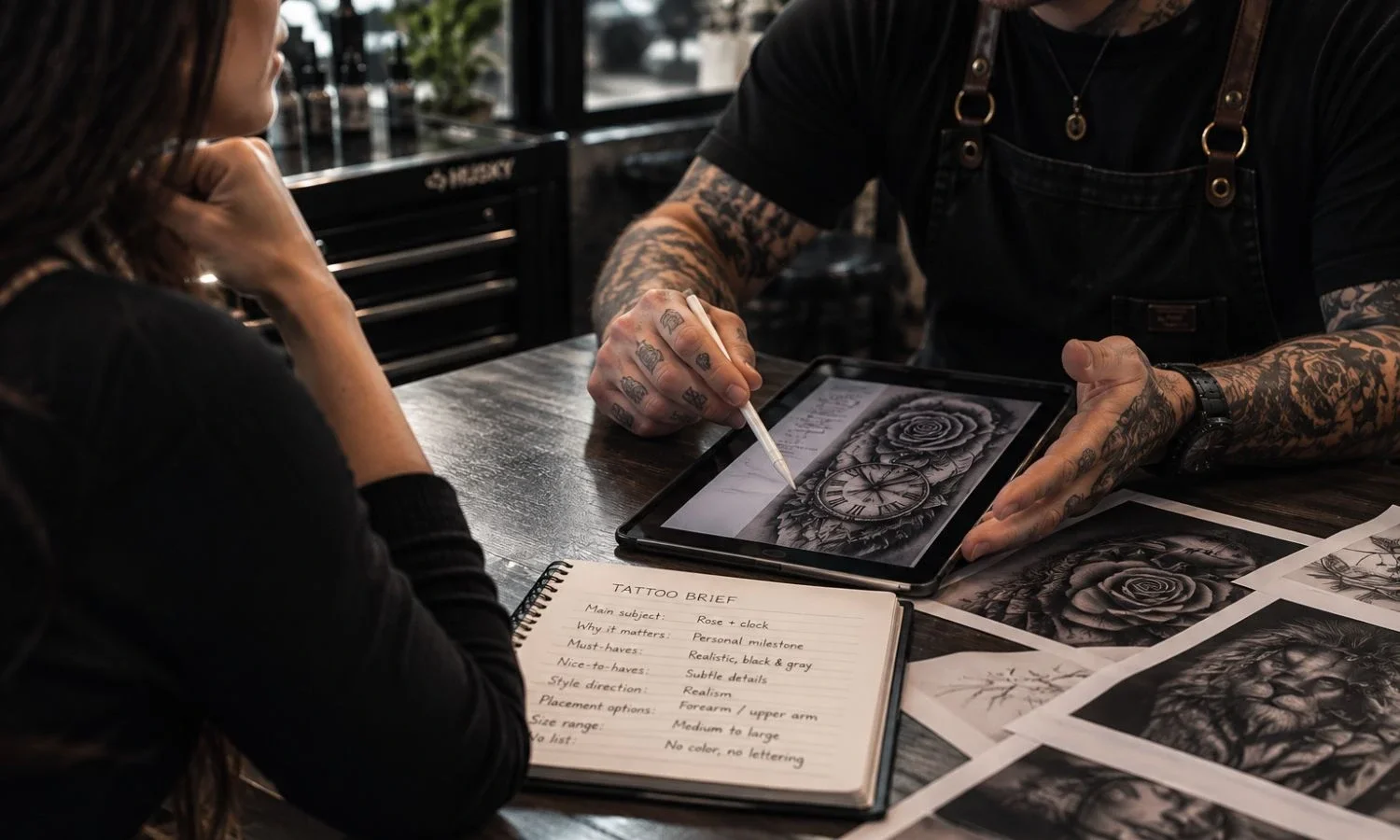
Before your consult, get your idea into a simple brief:
Main subject: What must be in the custom tattoo?
Why it matters: What's the story behind it?
Must-haves vs. nice-to-haves: What's non-negotiable?
Style direction: Fine line, black & gray, traditional, Japanese, illustrative, etc.
Placement options: Where are you open to putting it?
Size range: Small, medium, large (and how visible you want it)
No list: Anything you hate (fonts, colors, shapes, themes)
What to Bring to Your Consultation (So Your Artist Can Move Faster)
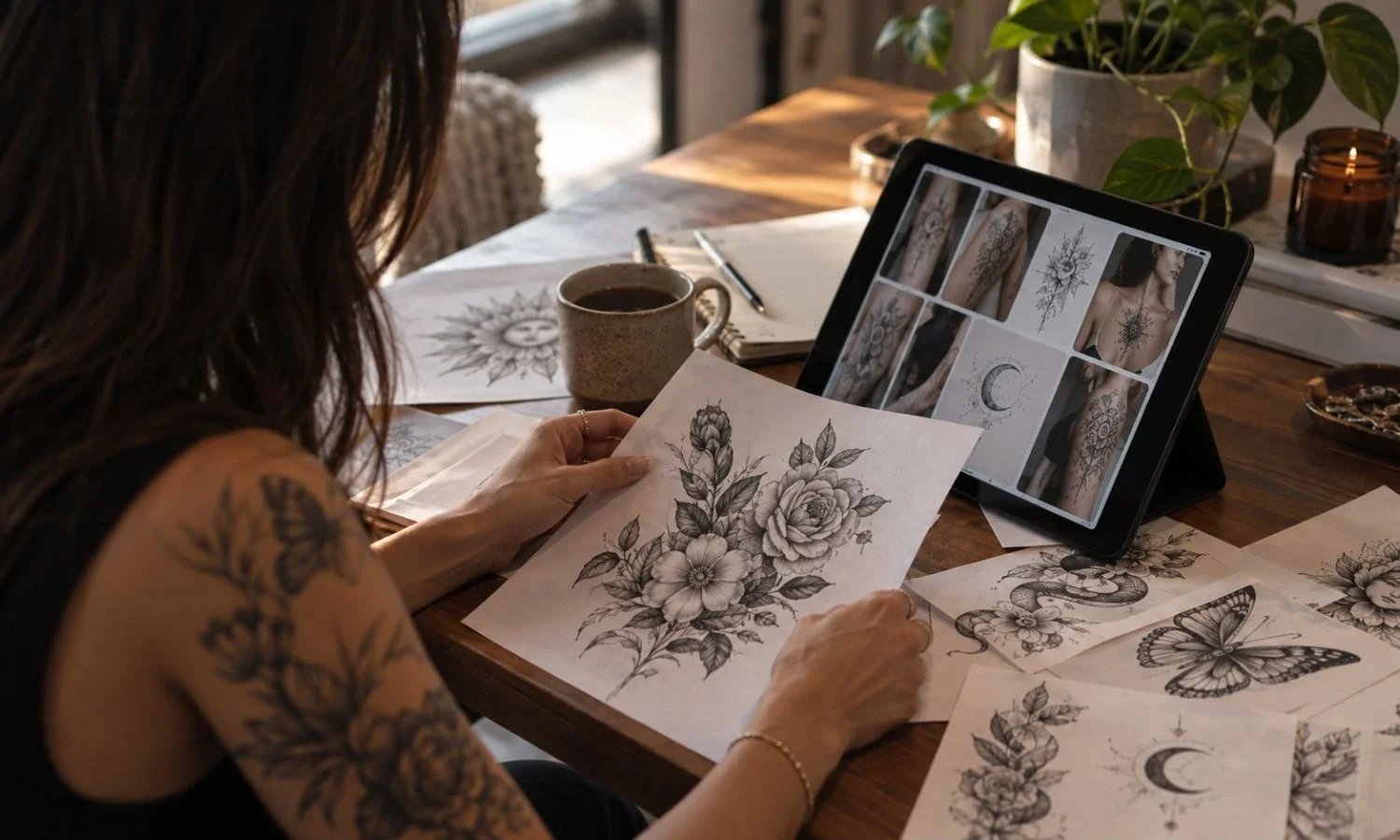
310 references that show the style, shading, line weight, and overall mood you like.
13 avoid examples (this saves a lot of back-and-forth).
Photos of the area if you have existing tattoos, scars, or a spot you're unsure about.
A one-sentence goal (seriously): I want a black and gray memorial rose with subtle initials.
Common Mistake: Bringing Too Many Ideas at Once
If you try to cram five themes into one small tattoo, it usually turns into visual noise. A good artist will help you choose a strong focal point and then decide what supports it.
This is how you help your artist do their job at a high level-especially if you've been searching for tattoo artists in San Antonio or the best tattoo shop near me and want to show up prepared.
Step 2: Choose a Style That Matches the Idea (and Your Skin)
Style is the voice of the tattoo. The same idea can look completely different depending on how it's executed.
Here's how pros think about style matching:
Black & gray: Great for depth, mood, realism, portraits, and smooth shading.
Fine line: Clean and subtle, but it needs smart sizing and spacing to stay readable.
American traditional: Bold lines and simple shapes that age strong.
Japanese traditional: Big flow, movement, and composition-especially for sleeves and back pieces.
Neo-traditional: A modern twist with bold structure and richer detail.
Watercolor / color illustrative: High impact color work that still needs solid fundamentals underneath.
How Artists Choose the Right Style (The Stuff Clients Don't See)
Professional artists also think about how the style will hold up based on:
Where it's placed (high-friction areas vs. protected areas)
How much detail you want and whether it has room to breathe
Contrast (the difference between light and dark that keeps the tattoo readable)
How the subject naturally wants to be drawn (some ideas look best bold; some look best delicate)
Pro Tip: Tell Your Artist What You Like About the Reference
Instead of I want this, try:
I like the line thickness on this one.
I like the soft shading here.
I like the composition but not the subject.
I like how it feels bold and readable from a distance.
If you're not sure what your style is, that's normal. Bring examples of what you like (and what you don't). You can also compare fine-line vs. bold tattoo styles to understand how different approaches can affect longevity, detail, and overall appearance. A professional will spot patterns fast and steer you toward a direction that fits your concept. You can also browse the Southern Tattoo Society artists to compare the styles and specialties of the studio's tattooers before your consultation.
Step 3: Pick Placement That Helps the Tattoo Age Well
Placement isn't just about where you want it. It changes the design.
Placement also affects how comfortable the session may be. Our guide to tattoo pain by body part breaks down common pain levels and what to expect from different areas.
Why? Because every body area has different:
shape and curvature
movement (bending, twisting, stretching)
skin texture and thickness
sun exposure and friction from clothing
visibility (and whether you need to cover it for work)
What Aging Well Really Means
Tattoos soften over time. That's normal. Good placement and smart design choices help your tattoo still read clean as it heals and settles.
Examples of how placement changes the plan:
Forearm: great visibility and real estate, but the design should flow with the arm's natural line.
Inner bicep: more private, but movement can change how a straight design reads.
Ribs: beautiful canvas for flow, but it needs a layout that follows the curve.
Thigh: great for larger pieces and detail, with room for bold composition.
Hands/neck: high-visibility and high-wear areas that need honest conversation about longevity and lifestyle.
That's why a design that looks perfect on a flat photo might need to be rebuilt for your shoulder, ribs, forearm, or thigh. The goal is flow and readability-now and later.
In a local studio setting-especially here in San Antonio where clients come in from areas like Stone Oak, Alamo Ranch, Helotes, Leon Valley, and the UTSA area-placement guidance is one of the biggest value-adds of working with a real shop instead of picking something random online.
Step 4: The Consultation-How Pros Pull the Real Story Out
A good consultation is where scattered thoughts turn into a plan. If you're preparing for your first appointment, our tattoo FAQs can also answer common questions about pricing, walk-ins, pain management, and choosing an artist.
Expect a professional artist to ask questions like:
What's the meaning behind it?
What's the main subject vs. background/supporting elements?
Do you want this to feel bold, soft, aggressive, elegant, classic, modern?
How visible do you want it day-to-day?
Do you have existing tattoos nearby that need to match or avoid?
Do you want room to expand into a sleeve or bigger project later?
What You Should Ask (Especially If It's Your First Tattoo)
What size do you recommend so it stays readable?
How would you approach this in black & gray vs. color?
What's the healing like for this placement?
How should I prep the day before and the day of?
What aftercare do you recommend for this specific piece?
What a Good Consult Feels Like
You should feel heard, not rushed. A real consultant has direction, clear expectations, and professional boundaries. Once you're ready to discuss your idea, you can book a free tattoo consultation and provide details about your preferred style, placement, size, and reference images. This is also where a pro will tell you the truth-without ego and without pressure. If your idea needs a size increase to keep details readable, or a layout change to fit your anatomy, a good artist will explain why.
Step 5: Drawing + Revisions-Where the Design Gets Built
Once your direction is clear, the artist starts building the piece.
Depending on the project, that can include:
rough sketches to lock in composition
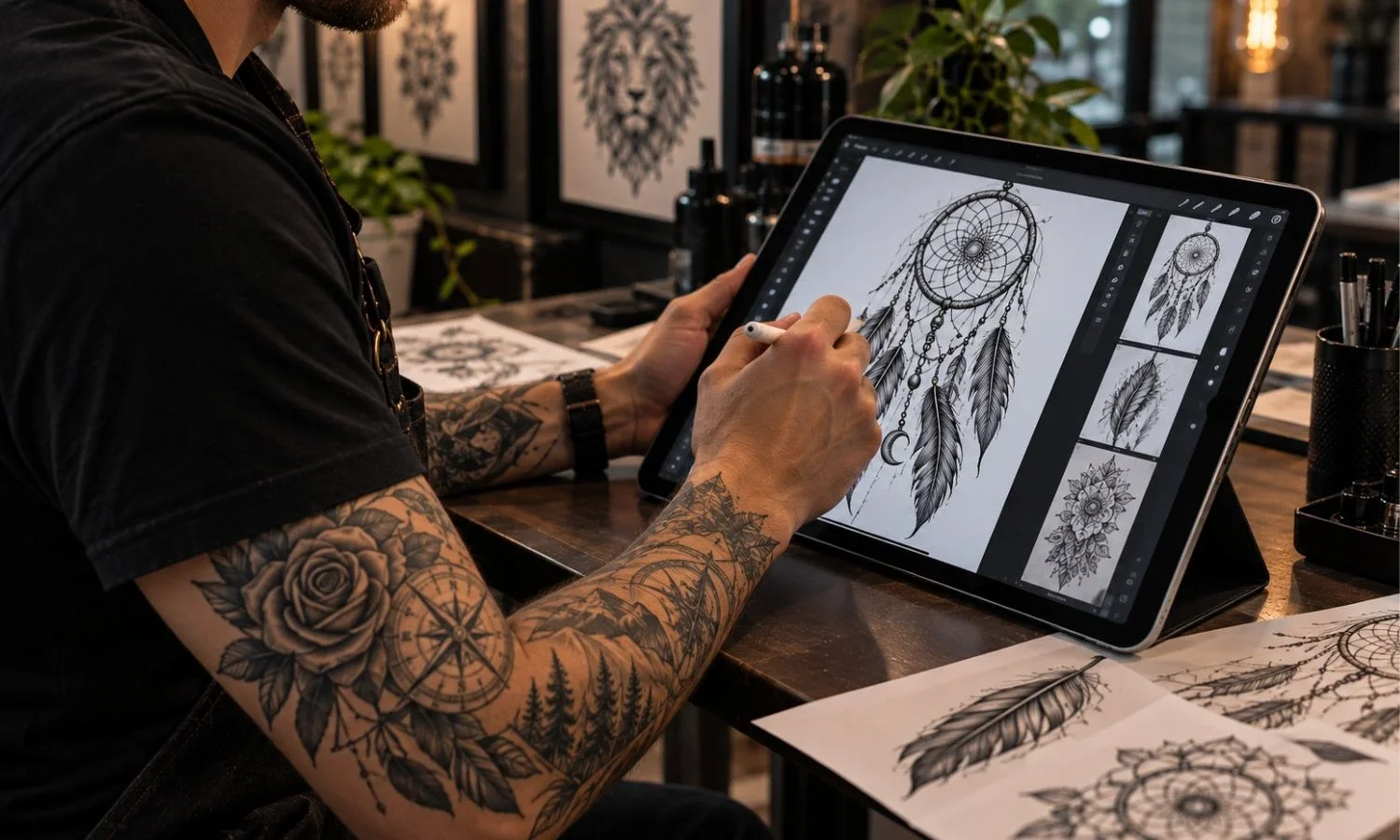
digital drawing for linework and shading planning
combining multiple references into one original design
adjusting contrast and negative space so the tattoo reads from a distance
Why Contrast Is Everything
One detail most clients don't realize: tattoos need contrast to stay readable. That contrast can come from bold line weight, smooth black & gray transitions, clean negative space, or smart color choices. Without contrast, even a cool design can heal into something flat.
How Artists Simplify Without Killing the Meaning
Simplifying doesn't mean making it basic. It means cutting details that won't translate to skin so the details that do matter can hit harder.
Examples:
Turning tiny text into a larger, cleaner script so it stays readable.
Reducing background clutter so the focal point pops.
Reworking a symbol so it reads clearly at the size you want.
And yes-references help. But copying isn't the goal. The goal is an original piece that fits you. That's how you end up with a custom tattoo that doesn't look generic, even if the subject is common (like roses, daggers, butterflies, or skulls).
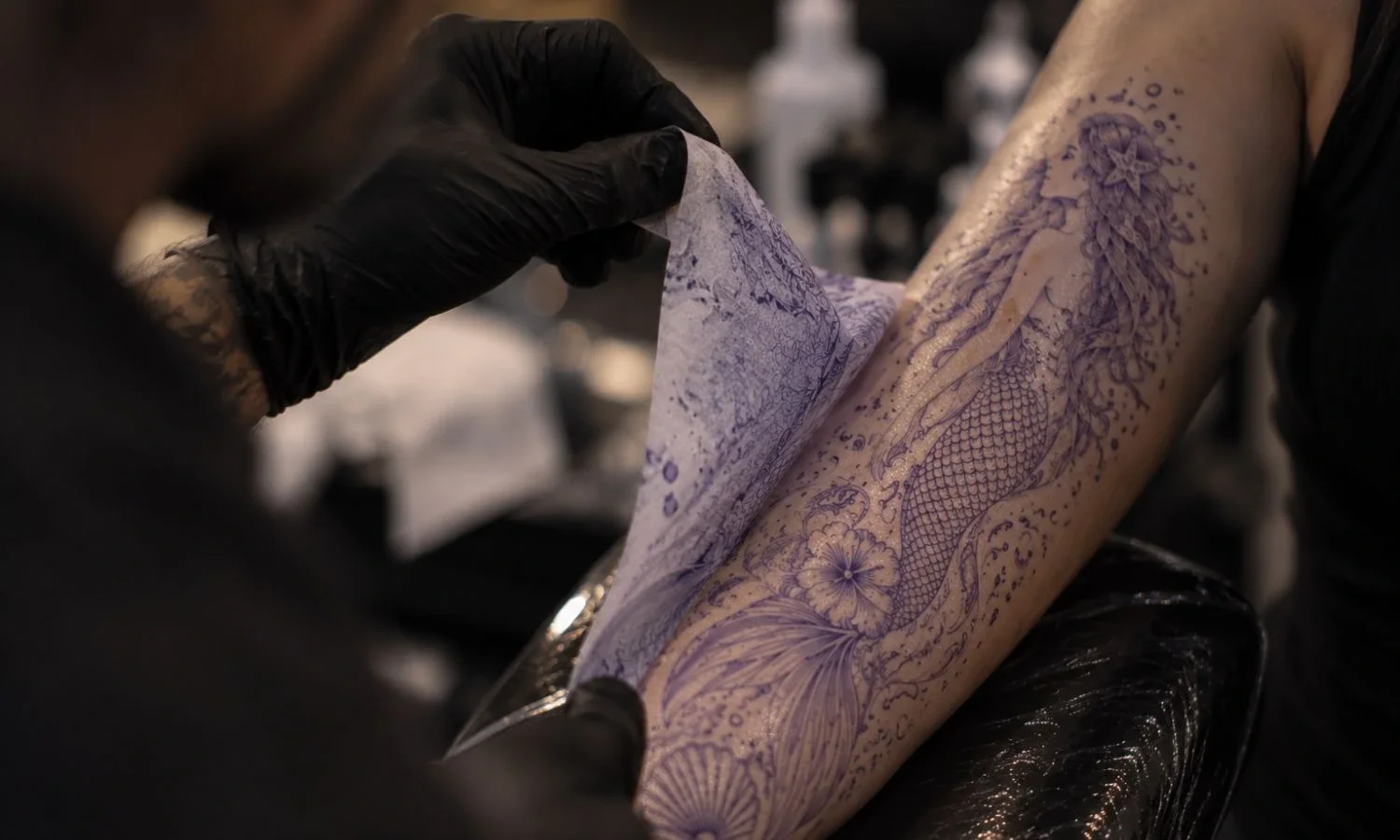
Step 6: Stencil + Fit Check-Making It Work on Your Body
The stencil is the moment the tattoo stops being an idea and becomes real.
A professional fit check includes:
Position testing: standing, sitting, arm relaxed, arm flexed
Flow check: does it follow the muscle and the natural line of the body?
Readability check: can you understand it quickly from a normal distance?
Last call edits: minor tweaks before anything permanent happens
What You Can (and Should) Speak Up About
Placement: Can we rotate it slightly so it sits straighter?
Size: Can we go a little larger so the detail doesn't get lost?
Spacing: Can we give that area more breathing room?
Balance: Can we shift the focal point so it feels centered on my body?
This step protects you from regret. If something feels off, speak up here. A good artist would rather adjust the stencil than hope it works out.
Safety and Professionalism: What a Legit Studio Does Differently
Design matters. So does everything around it.
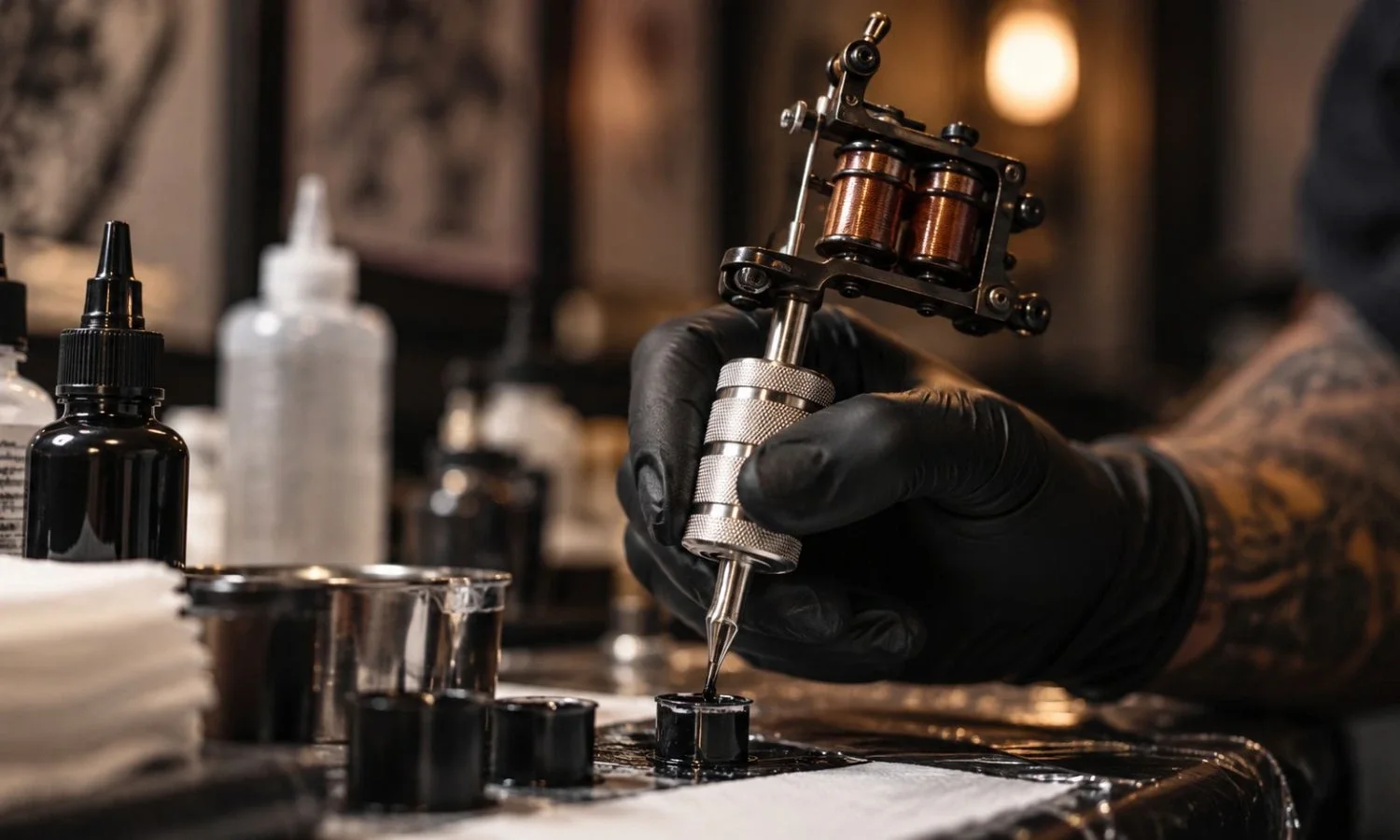
Tattooing breaks the skin. That means the studio's cleanliness, setup, and standards are part of the result-not an afterthought.
At a professional San Antonio shop, you should expect:
a clean, organized station setup
sterile, single-use items where appropriate and proper sanitation protocols
clear communication (no rushing, no guessing)
real aftercare instructions that match the work you got
Green Flags When You're Choosing a Studio
They ask questions about placement, size, and long-term outcome-not just what do you want?
They set expectations (time, sessions, healing, touch-up policy) clearly.
They respect the craft and don't treat tattoos like fast fashion.
They prioritize cleanliness and make you feel comfortable speaking up.
Southern Tattoo Society is known for clean, sterile practices, professional artists, and high-quality work. That's the baseline we hold ourselves to-because the tattoo experience should feel safe and solid from consultation to healing.
And if you're also looking for a piercing shop in San Antonio, those standards matter just as much. Professional body piercing requires proper placement, quality jewelry guidance, sterile technique, and aftercare that's actually explained-not rushed.
Aftercare: Protecting the Lines, Shading, and Color
Your tattoo isn't finished when you leave the chair. Healing is part of the final outcome. Understanding how long a tattoo takes to heal can also help you know what to expect during the first few weeks and beyond.
Always follow your artist's specific instructions, but strong aftercare habits usually include:
keep it clean as directed
don't pick, scratch, or peel healing skin
use only the recommended aftercare product (and don't over-apply)
avoid soaking while it's healing
avoid heavy sun exposure during healing
wear clean, loose clothing if the area rubs
What Healing Can Look Like (So You Don't Panic)
Everybody is different, and your artist's guidance comes first. But in general, healing often includes stages like redness early on, then dryness and flaking, and then a settling period where the tattoo looks a little dull before it fully comes back. If something feels unusual or concerning, reach out to your studio promptly.
Long-Term Care: Keep It Sharp
Sun protection: UV exposure is one of the fastest ways to fade tattoos.
Moisturized skin: healthy skin keeps tattoos looking better.
Touch-ups (when needed): some tattoos may need a touch-up depending on placement, skin, and lifestyle.
Bottom line: if you're investing in a custom design, protect it like one.
FAQ: Common Custom Design Questions
Do I Need to Bring a Perfect Drawing?
No. Bring a clear idea, a few references, and be ready to explain what you like about them. The artist's job is to design.
How Many Reference Images Should I Bring?
Enough to show direction without overwhelming the concept-usually 310 solid images is plenty. Include at least one example of what you don't want if you can.
Can You Copy a Tattoo I Found Online?
A professional artist will use references, but they shouldn't copy another artist's custom work line-for-line. Original designs protect the culture, and they look better when they're built for your body and your story.
What If I'm a First-Time Client and I'm Nervous?
That's normal. A real consultation should make you feel informed, not pressured. Ask questions about placement, pain expectations, healing, and aftercare before you commit.
How Do You Make Sure Small Details Don't Blur Together Later?
With proper sizing, spacing, line weight, contrast, and smart simplification. Some details look great on paper but won't hold up on skin. Good artists design for longevity.
How Long Does the Custom Design Process Take?
It depends on the size and complexity. A small piece may come together quickly, while sleeves, back pieces, and multi-session projects require more planning. The goal is quality, not speed.
Can I Mix Styles in One Tattoo?
Sometimes-but it takes a clear plan. If your references pull in different directions, a professional will help you choose one dominant style so the tattoo looks intentional instead of conflicted.
What If I Want a Tattoo That Covers an Old One?
Cover-ups are a specialty skill. They require honest sizing and design choices so the old tattoo doesn't show through. Bring clear photos of the existing piece and be open to the artist's recommendations. For more details, read our guide on tattoo cover-ups and when they work.
Book a Consultation in San Antonio
If you've got an idea-even a rough one-we'll help you turn it into something wearable, readable, and personal.
Southern Tattoo Society is a locally owned tattoo and piercing studio in San Antonio, Texas, located at 7327 N Loop 1604 W #101A, San Antonio, TX 78249. Whether it's your first tattoo or your tenth, our team will guide you through the design process with professionalism, clean practices, and a focus on quality.
Ready to start? Book a consultation at https://www.southerntattoosociety.com/ and let's build your next piece.