Tattoo Cover-Ups: When They Work and When They Don't
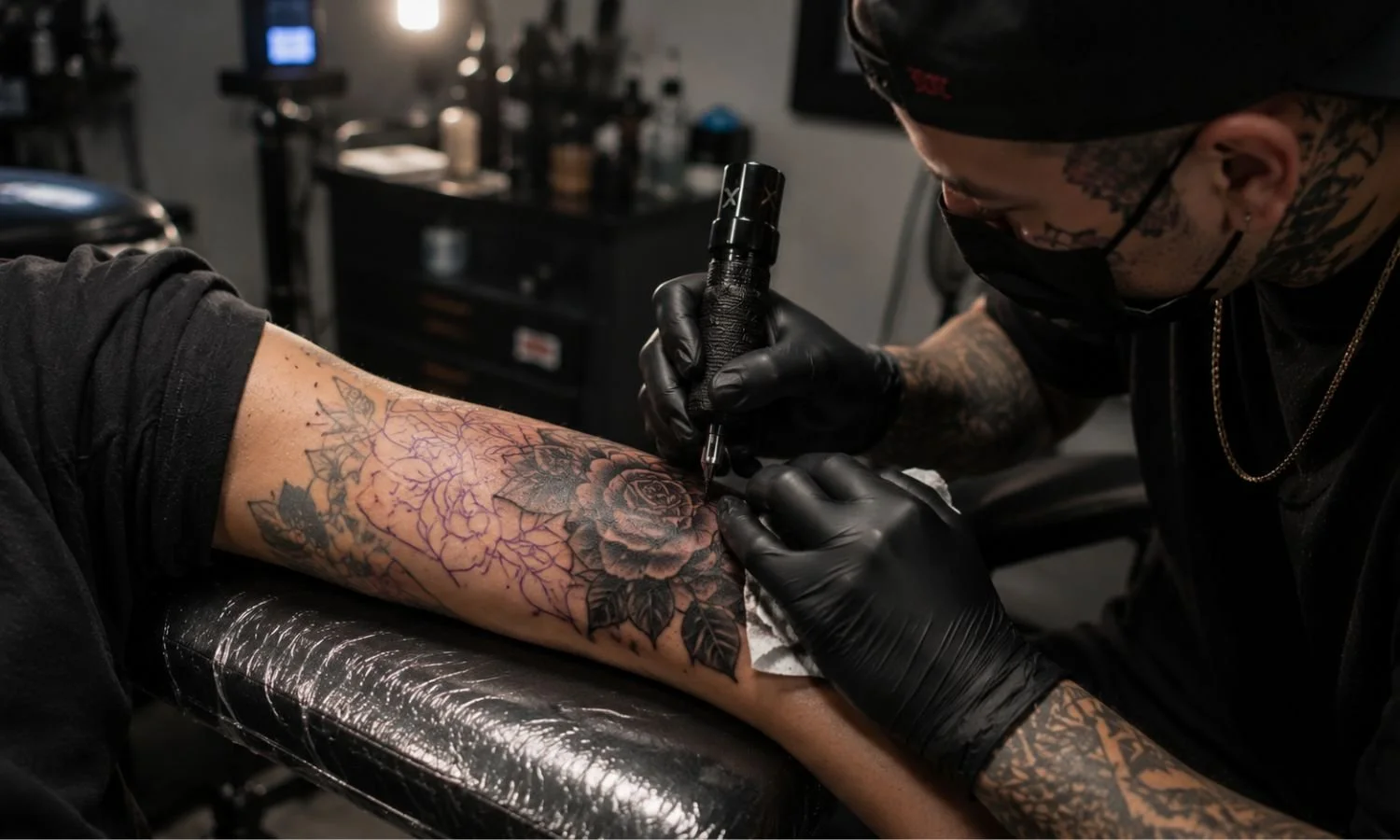
We have all been there, or at least we know someone who has. A poorly executed design from a living room artist, the name of an ex-partner that didn’t quite make it to “forever,” or a trend from ten years ago that no longer feels like you. Tattoo regret is common — and it doesn’t mean you made a “bad” choice. It means you’ve changed, your taste has evolved, or the original work simply wasn’t done at a professional level.
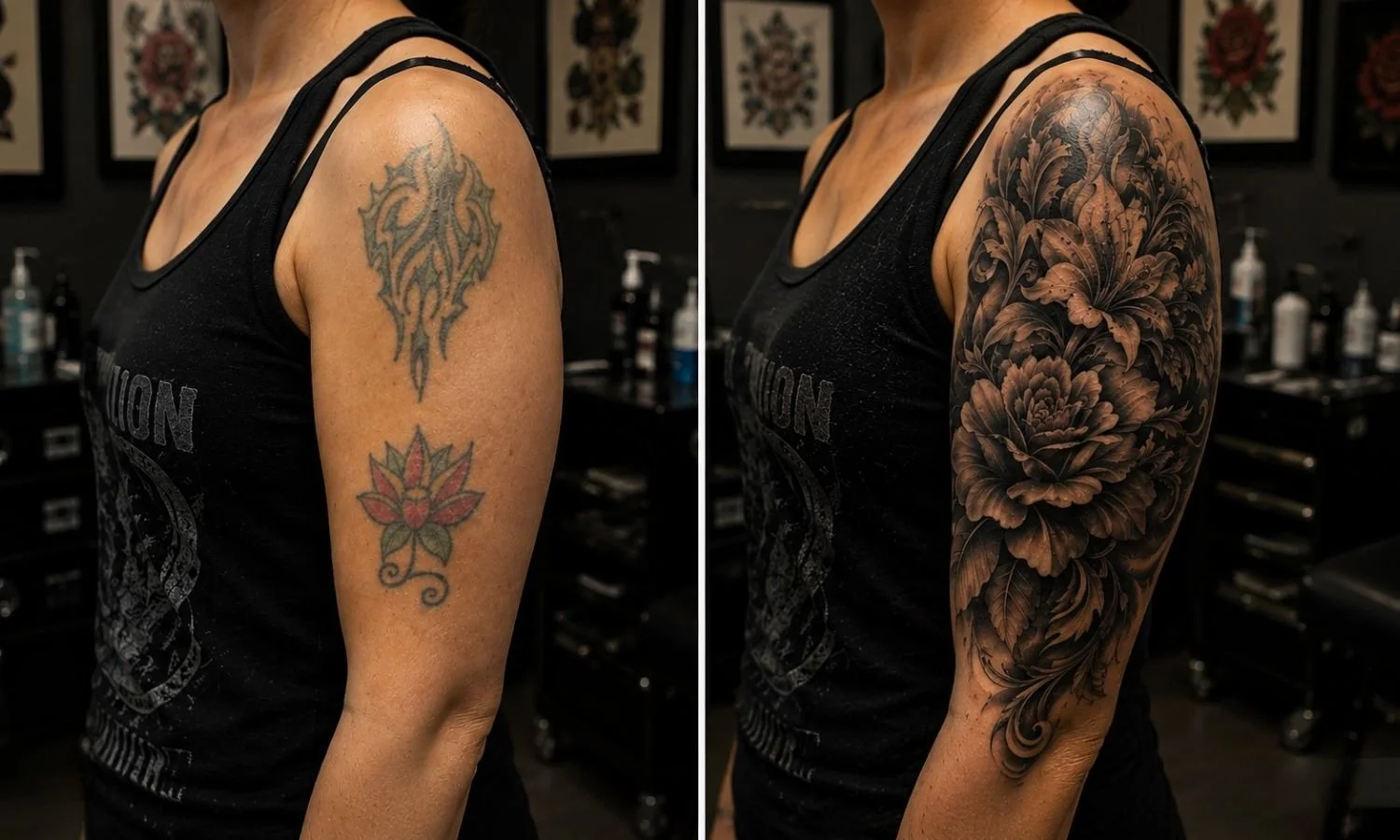
A well-planned tattoo cover up can turn an old piece of ink into something you’re proud to wear. But a cover-up isn’t a magic eraser. It’s a strategic redesign that depends on the existing ink, your skin, and the experience of the artist building the new piece.
If you’re in San Antonio and thinking about updating or replacing an older tattoo, this guide breaks down the real-world rules: when cover-ups work beautifully, when they struggle, and what you can do to set yourself up for the best possible result.
Table of Contents
The Core Mechanics of a Tattoo Cover-Up
When Cover-Ups Work Beautifully
When Cover-Ups Struggle (And Why)
Laser Tattoo Removal vs Cover-Up (And Why “Both” Is Common)
Cover-Up Styles and Techniques That Actually Hide Ink
Physical Challenges: Scar Tissue, Blowouts, and Placement
Planning, Process, and Cost (What to Expect)
Aftercare: How to Heal a Cover-Up Cleanly
Book a Consultation in San Antonio
Conclusion
The Core Mechanics of a Tattoo Cover-Up
To understand how a cover-up works, you have to understand where tattoos live. Tattoo ink doesn’t sit on the surface — it’s placed into the dermis (the layer under the top skin). That matters because when you add new ink, it sits in the same layer as the old ink. Over time, healed ink layers visually blend.
That’s why cover-ups are closer to an optical illusion than a paint job. Think of it like layering tinted glass: you can darken, shift the color, and redirect the eye — but you can’t make what’s underneath vanish by placing something lighter on top.
Cover-up rule #1: the new design usually needs to be larger, more detailed, and/or darker than the old tattoo. The goal is to build enough texture (shadows, contrast, line weight, and movement) so the old shapes get absorbed into the new composition.
Cover-up rule #2: “perfect” isn’t the target — believable is. The best cover-ups don’t just hide the old tattoo; they look like the new design was always meant to be there.
When Cover-Ups Work Beautifully
Cover-ups are highly successful under the right conditions — and most tattoos can be improved significantly with the right plan. Here are the situations where a cover-up tends to go smoothly.
1. The Original Tattoo Is Faded (Or Aged)
Faded ink is easier to redirect. Older tattoos usually lose saturation and sharp edges, which gives a cover-up artist more flexibility with color, shading, and detail. Even if your tattoo isn’t “old,” sun exposure and time can soften bold outlines — and that can work in your favor.
What to look for: if the old tattoo looks grayish instead of solid black, or if the lines have softened, you likely have more design options.
2. The Original Tattoo Is Small, Light, or Has Negative Space
Minimalist pieces, fine line tattoos, and designs with open skin between elements are often great candidates. Negative space lets the new design breathe. It also gives the artist room to place new focal points (like faces, flowers, or bold shapes) where they’ll look clean and intentional.
Why it matters: large blocks of solid ink limit the “light” you can build into the new piece. Sparse ink gives you room to create contrast.
3. The New Design Has Organic Texture and Movement
Cover-ups rarely succeed with simple shapes or symmetry-heavy designs. Straight lines, perfect circles, and clean geometry leave nowhere to hide uneven edges or old outlines.
Instead, the most successful cover-up designs rely on natural texture and flow — elements that allow deep shadows and layered detail. Strong options include:
Florals and botanicals: petals, leaves, and stems create natural shadow pockets and curved lines.
Animals and creatures: fur, feathers, scales, and wings hide old lines extremely well.
Japanese-inspired compositions: koi, dragons, waves, wind bars, peonies, and background shading can absorb old shapes.
Neo-traditional and American traditional: bold outlines + strong shading can overpower older work when planned correctly.
Black & gray realism (when the base ink allows it): controlled contrast and smooth gradients can camouflage old marks.
When Cover-Ups Struggle (And Why)
Some cover-ups are challenging — not because the artist “can’t do it,” but because physics and skin have limits. Knowing these limits upfront helps you avoid disappointment and choose a plan that actually works.
Can a Dark Tattoo Be Covered With Color?
Yes — with limitations. Light colors do not hide dark ink. Pastels, pale yellows, light pinks, and most whites will not cover solid black. Darker, cooler tones do the heavy lifting: deep blues, purples, greens, and black itself.
How color gets used successfully: saturated color often works best in the areas around the darkest parts of the old tattoo, while the artist uses shadow and contrast to neutralize the core problem areas.
Why Some Cover-Ups “Ghost”
When you can still see the old tattoo underneath, that’s usually “ghosting” (also called bleed-through). The most common reasons:
The new design didn’t have enough contrast: not enough dark-to-light range to override what’s underneath.
Placement wasn’t strategic: the darkest parts of the new design didn’t land over the darkest parts of the old tattoo.
The skin is scarred or raised: ink can be redesigned, but texture is harder to hide.
Healing or aftercare issues: ink loss from picking, over-washing, or friction can reveal the old marks.
What a professional studio does differently: they plan the cover-up as a full composition, not a patch. That means mapping old lines, choosing a design with built-in camouflage, and setting expectations before any stencil goes on skin.
Cover-Up Styles and Techniques That Actually Hide Ink
Not every unwanted tattoo needs to be removed. In many cases, a well-planned cover-up can give you a design you'll be proud to wear.
Heavy Blackwork and Blackouts
Blackwork can be a powerful solution for dense, dark tattoos. A full blackout (solid panels of black) guarantees coverage, but it’s not the only approach. Many clients choose blackwork with structure: mandalas, ornamental patterns, geometric blackwork, or layered dotwork. Done right, it looks intentional — not like a “fix.”
Best for: bold older pieces, thick tribal, or designs with heavy black areas that won’t fade easily.
Blast-Over Style
A blast-over places a new bold tattoo on top of the old one without fully hiding it. The old tattoo becomes a background layer. This can look sharp and modern when the new design has strong line weight and clear focal points.
Best for: faded tattoos where you want a new statement piece and don’t mind a layered look.
Traditional and Neo-Traditional “Power Pieces”
Traditional and neo-traditional tattoos are popular cover-up choices for a reason: clean composition, bold outlines, and strong shading can take control of the space. Think panthers, roses, daggers, birds, snakes, or larger illustrative scenes.
Best for: older “random” tattoos that need a single cohesive design to unify the area.
Physical Challenges: Scar Tissue, Blowouts, and Placement
Your skin is the canvas — and the canvas matters. Two people with the same old tattoo may have totally different cover-up outcomes depending on scarring, skin quality, and placement.
Tattooing Over Scarring (What You Need to Know)
Scar tissue holds ink differently than healthy skin. It can be more sensitive, it can reject pigment in spots, and it can heal unevenly. Raised scars also create visible texture that lighting can highlight, even after a successful redesign.
What helps: an artist who understands how to build texture into the design (so the eye reads “intentional detail,” not “problem area”), and a plan that doesn’t require ultra-clean micro-lines over damaged skin.
Tricky Placements for Cover-Ups
Some areas are simply harder to keep crisp: hands, fingers, elbows, knees, ribs, and stomach. Movement and skin thickness affect how ink settles and how it ages.
What that means for you: you may need a bolder design, stronger contrast, and more room than you expected — especially on joints where lines can spread over time.
Planning, Process, and Cost (What to Expect)
A cover-up is a project. The best results come from good planning, honest feedback, and a studio that takes cleanliness and professionalism seriously.
How Long You Should Wait Before Covering a New Tattoo
If your tattoo is fresh, it’s not ready to cover. Skin needs time to fully heal and for the ink to settle. Most artists recommend waiting at least 6–8 months (often longer) before attempting a cover-up on new work.
Why: covering too early risks infection, poor ink retention, and uneven healing — and it can make the final result look muddy.
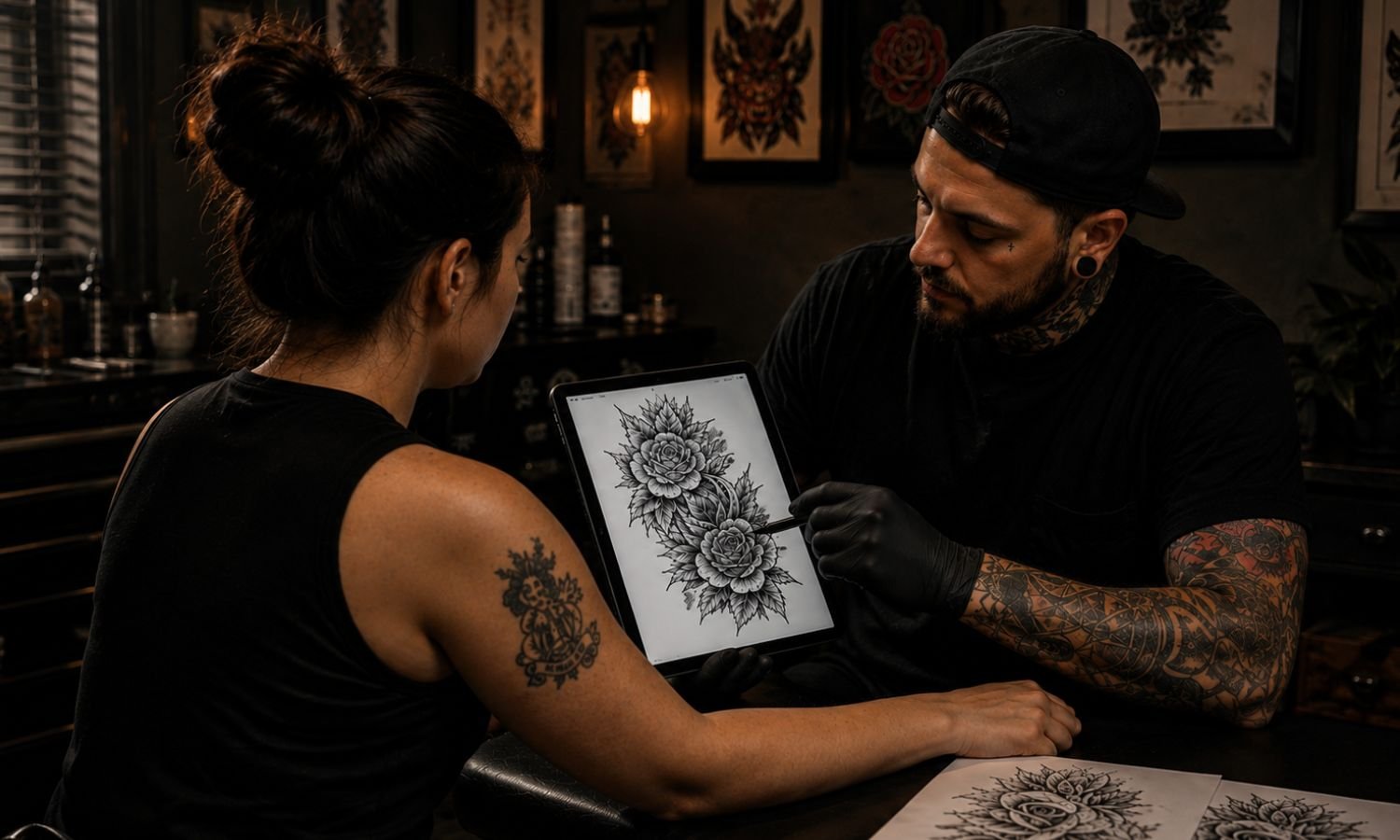
What a Professional Cover-Up Consultation Looks Like
A real consultation isn’t just picking a picture off a wall. You should expect the artist to:
Assess the old tattoo’s color, saturation, size, and placement
Check the skin for scarring, raised lines, or blowouts
Talk through your goals (hide it completely vs redesign vs blast-over)
Recommend the right direction on size, subject matter, and style
Set expectations on what “covered” will look like once healed
Design process tip: bring reference images for style and mood, not just one exact tattoo you want copied. Cover-ups work best when the artist can customize the design around the problem areas.
If you want quick answers before you come in, you can also check our FAQs.
Cost: Why Cover-Ups Are Usually More Than a Standard Tattoo
Cover-ups often take more time than a fresh tattoo because the artist is solving a problem, not just applying a design. Expect a larger piece, more drawing time, and sometimes multiple sessions depending on complexity and placement.
A good rule of thumb: if someone is offering a cheap cover-up without a healed cover-up portfolio, that’s a red flag. A cover-up should be an upgrade — not another future fix.
Aftercare: How to Heal a Cover-Up Cleanly
Cover-ups can heal a bit tougher than first-time tattoos because the skin has already been worked before. You may see heavier scabbing, swelling, or soreness — especially if the cover-up required dense shading or packing pigment into an area that’s been tattooed multiple times.
To give your new tattoo the best chance to heal cleanly (and keep the old ink from showing through), focus on the basics:
Cleanliness: wash gently with an unscented soap, then pat dry with a clean paper towel.
Moisture control: use a thin layer of approved aftercare product — too much can clog pores and cause irritation.
Hands off: do not pick. Pulling scabs can remove pigment and create patchy areas where old lines reappear.
Protect it: avoid soaking (pools, hot tubs), heavy sweating, and direct sun while healing.
Want a more detailed timeline? Read how long a tattoo takes to heal.
Book a Consultation in San Antonio
If you want a cover-up that looks intentional, heals clean, and holds up long-term, start with a real consultation — not a guess. At Southern Tattoo Society (7327 N Loop 1604 W #101A, San Antonio, TX 78249), our team is known for clean, sterile practices, professional artists, and high-quality work across styles like custom tattoos, fine line, black & gray, Japanese traditional, neo-traditional, American traditional, and watercolor/color illustrative.
Our founder, A.ONE, brings 23+ years of experience to the studio, and we take the time to map out your options so you don't end up needing a cover-up for your cover-up. You can check out our work and specialties on the Artists page.
If you're considering a tattoo cover up in San Antonio, book a tattoo consultation with Southern Tattoo Society and let's build something you actually want to wear.
Conclusion
Cover-ups work when the plan matches reality: the existing ink, the skin, and the design all have to cooperate. The best results come from realistic expectations, a design built for camouflage, and an experienced artist who prioritizes cleanliness and craft.
Your old tattoo doesn’t have to define the space forever. With the right approach — whether that’s a bold black & gray piece, a Japanese-inspired composition, or a strong traditional design — you can reclaim the area and walk out with something that fits who you are now.