Find What Ear Piercings Fit You Best: Lobe, Helix, Tragus & Cartilage
You’ve left the studio with a piece of art you love, but right now, your skin likely feels tight and radiates heat like a bad sunburn.
That sensation is your body’s natural response to what is essentially a "controlled medical scrape." While the stinging might feel alarming, it is the predictable kickoff to the tattoo healing process where your immune system begins locking the pigment in place.
Appearances during the next few weeks will be deceiving. Medical consensus distinguishes between two layers of recovery: the epidermis, your outer protective layer which seals quickly, and the dermis, the deeper tissue where the ink actually lives. Treating the surface is straightforward, but protecting that deeper layer requires respecting the full tattoo healing timeline.
Consider the "Iceberg Model" of recovery to manage your expectations. The two weeks of visible peeling represent only the tip of the process, while the structural repair hidden underneath constitutes the bulk of the work.
Although your skin may look finished after a month, the complete tattoo recovery time often extends up to six months as the dermis fully reorganizes around the ink.
Table of Contents
How to Choose the Right Ear Piercing (Fast Checklist)
Quick Comparison: Pain, Healing, and Lifestyle Fit
The Lobe: Why This “Fleshy Foundation” Is the Low-Maintenance Hero
Mapping the Outer Rim: Why Helix Piercings Are the “Real Estate” of Ear Curation
The Tragus (and Other Inner Cartilage): Bold Look, Longer Healing
Match the Piercing to Your Ear Anatomy (So It Looks Right and Heals Right)
Pain + Healing Timelines: What to Expect (and What’s Normal)
Jewelry That Heals Best (and What to Avoid)
The Southern Tattoo Society Piercing Process (Consultation to Placement)
Aftercare That Prevents Bumps and Irritation
Why Southern Tattoo Society Clients Choose Southern Tattoo Society
Schedule Your Piercing Appointment
How to Choose the Right Ear Piercings (Fast Checklist)
If you want the best result with the least drama, decide based on these four things:
Your lifestyle: side-sleeping, helmets, over-ear vs. in-ear headphones, work environment, and how often you're changing shirts/hats that can snag jewelry
Your healing timeline: lobes are relatively quick; cartilage needs months of consistent care
Your ear anatomy: not every ear can support every placement the same way (and forcing it is how bumps, migration, and constant irritation happen)
Your long-term look: one clean statement piece vs. building a curated stack over time
Use this simple decision guide:
Want low maintenance? Lobe (or upper lobe) is your best starting point.
Want visible style without going ''advanced''? Helix with a flat-back stud (heal it first, then upgrade).
Want a bolder, center-of-the-ear look? Tragus or conch-just plan for a longer healing runway.
Want multiple piercings? Build in phases. One fresh cartilage piercing at a time is usually the smoothest path.
Two quick questions to ask yourself before you book:
What can I realistically protect for months? (Sleeping, headphones, hair snagging, hats, etc.)
Do I want ''done today'' or ''built over time''? Ear curation looks effortless when it's planned-messy when it's rushed.
First-timer? Start with a lobe or a simple helix so you learn how your body heals.
Already have a few? Consider tragus, conch, or a multi-point plan that builds a balanced ear stack without crowding your anatomy.
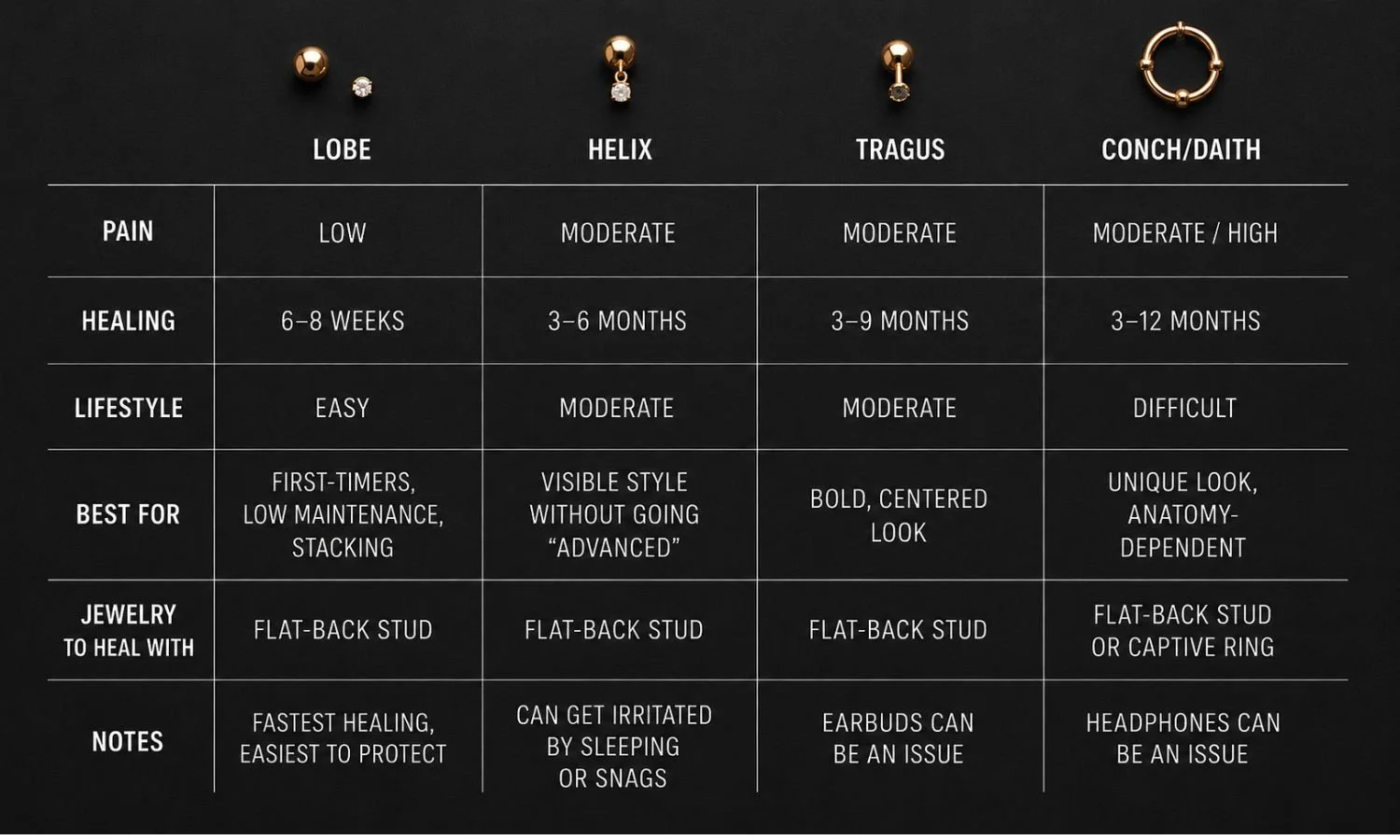
Quick Comparison: Pain, Healing, and Lifestyle Fit
If you want the fastest way to narrow your options, start here. (Pain is personal, but this is what most clients report.)
Lobe: lowest pain, fastest healing, easiest to protect.
Helix: moderate pain, longer healing, gets irritated by sleeping/snags.
Tragus: moderate pain/pressure, long healing, earbuds can be an issue.
Conch/daith (inner cartilage): anatomy-dependent, long healing, headphones can be an issue.
Still not sure? That's what a consultation is for. We'll look at your ear, talk about your routine, and map something that actually makes sense for you-not just what's trending this week.
The Lobe: Why This “Fleshy Foundation” Is the Low-Maintenance Hero
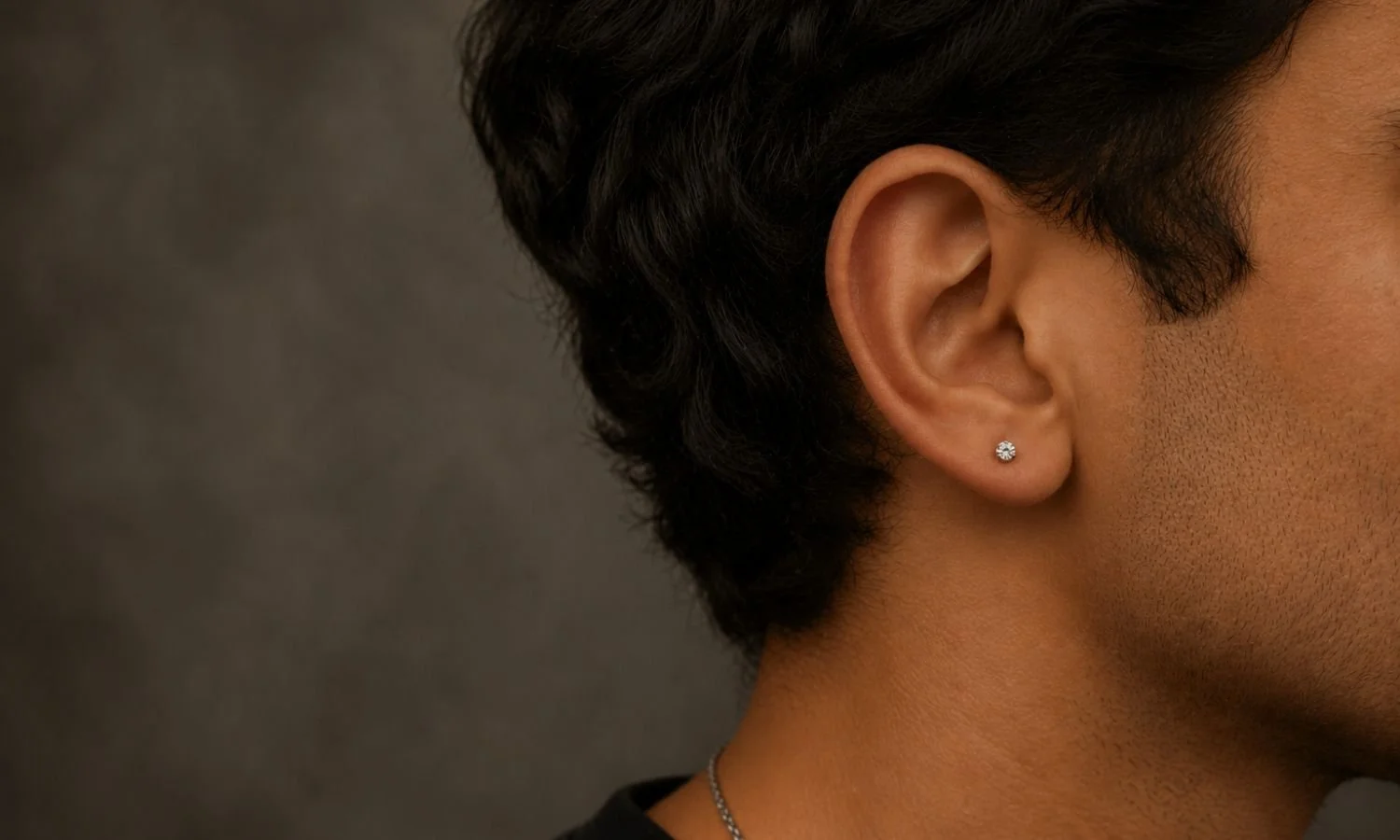
Wondering which ear piercing hurts the least? Start with the lobe. Because this area is soft tissue (not rigid cartilage), it tends to be the quickest to heal and the easiest to live with day to day.
Why people love lobes:
They're forgiving while you learn aftercare basics.
They give you tons of styling freedom once healed (studs, hoops, dangles, stacked looks).
They're ideal for busy lifestyles because they usually calm down faster than cartilage.
Best for: first-time clients, anyone who wants simple healing, anyone building a curated look who needs a strong foundation.
Beyond a single traditional hole, the lobe has serious styling potential. If you have enough space, you can do stacked lobes (two or more placements) or a subtle constellation look. If you wear heavier earrings regularly, we'll also talk about placement and spacing that helps reduce stretching over time.
Two lobe upgrades that look clean (and stay wearable):
Upper lobe: the perfect bridge between lobe and cartilage-stylish, but usually easier than helix.
Balanced stacks: instead of lining everything up, stagger placements slightly so jewelry sits with breathing room.
Pain: ~112/10 (most people describe it as a quick pinch)
Healing: ~618 weeks (varies by person and aftercare)
Best starter jewelry: implant-grade titanium flat-back stud
What gets lobes in trouble: swapping jewelry too soon, sleeping on them with pressure, and using harsh cleaners. Even if the outside looks healed, give your body time to build a stable channel so the piercing doesn't get irritated or start shrinking.
Mapping the Outer Rim: Why Helix Piercings Are the “Real Estate” of Ear Curation
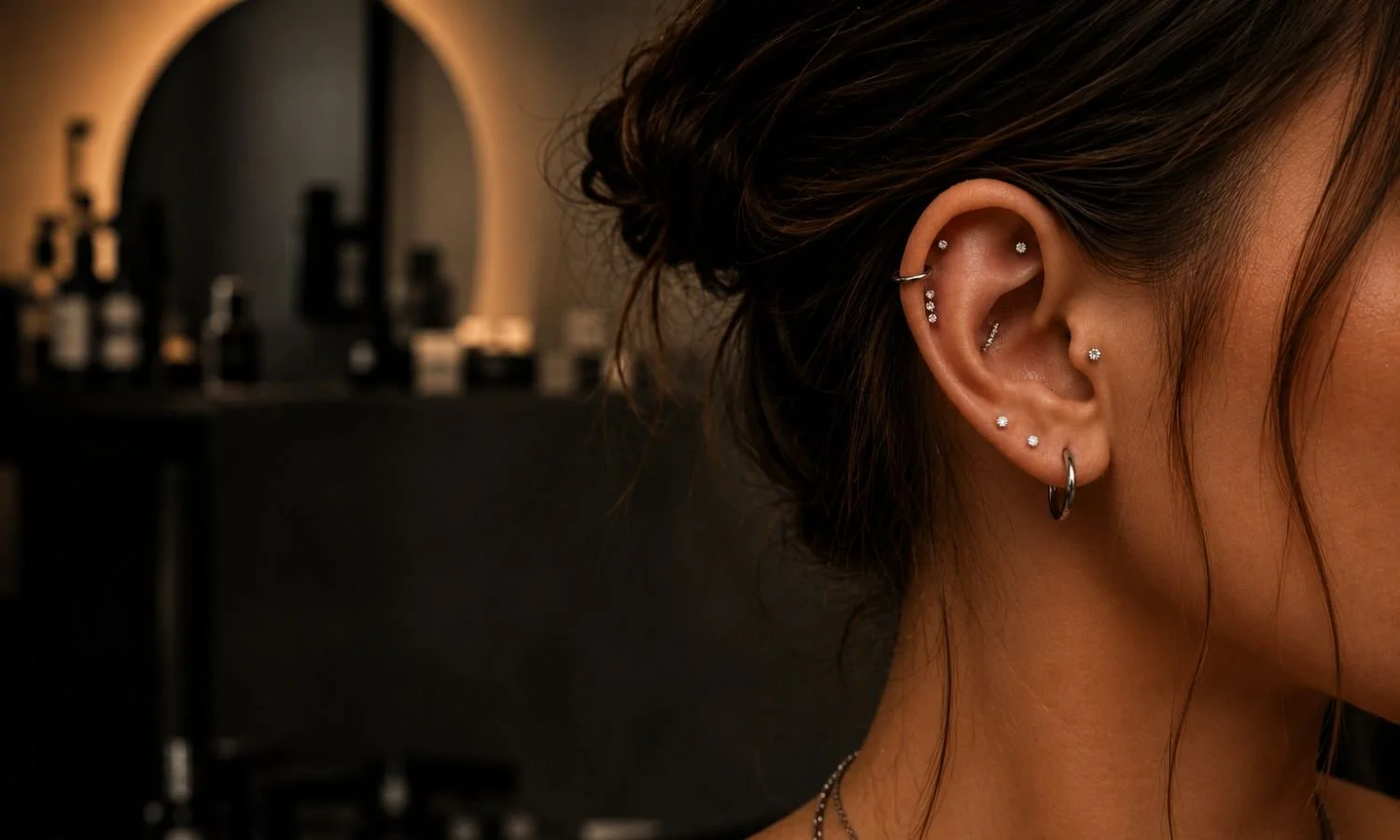
Move up from the lobe and you hit the helix-the outer rim of your ear. This area gives you the most options for building a cohesive look: single helix, double or triple helix, mid-helix, and forward helix.
Helix is where style meets patience. Because the helix is cartilage, it needs more time to fully calm down. The piercing appointment is quick, but cartilage can stay tender longer and is easier to irritate if you sleep on it or snag it on hair, masks, or shirts.
What to know before you pick helix:
If you sleep on that side: plan on a travel pillow (or train yourself to sleep on the other side).
If you wear helmets/hard hats: we'll talk placement so it's not rubbing all day.
If your hair is constantly catching: you'll want a snug, well-fitted flat-back during healing.
Stud first, hoop later is the move for most people. A flat-back stud is typically more stable during healing (less movement = less irritation). Once it's healed and settled, upgrading to a hoop can look amazing-especially if your anatomy naturally frames the jewelry.
Helix styling ideas that age well:
Single helix + stacked lobe: clean, balanced, never looks overdone.
Double helix: gives you symmetry without needing a ton of piercings.
Forward helix accents: small details that make the whole ear look curated.
If you're a side sleeper, protect your healing helix with a travel neck pillow (sleep with your ear in the center hole). Small habit change. Huge difference. Also: be mindful with brushing hair behind your ear, pulling tees/hoodies over your head, and taking off helmets or hats.
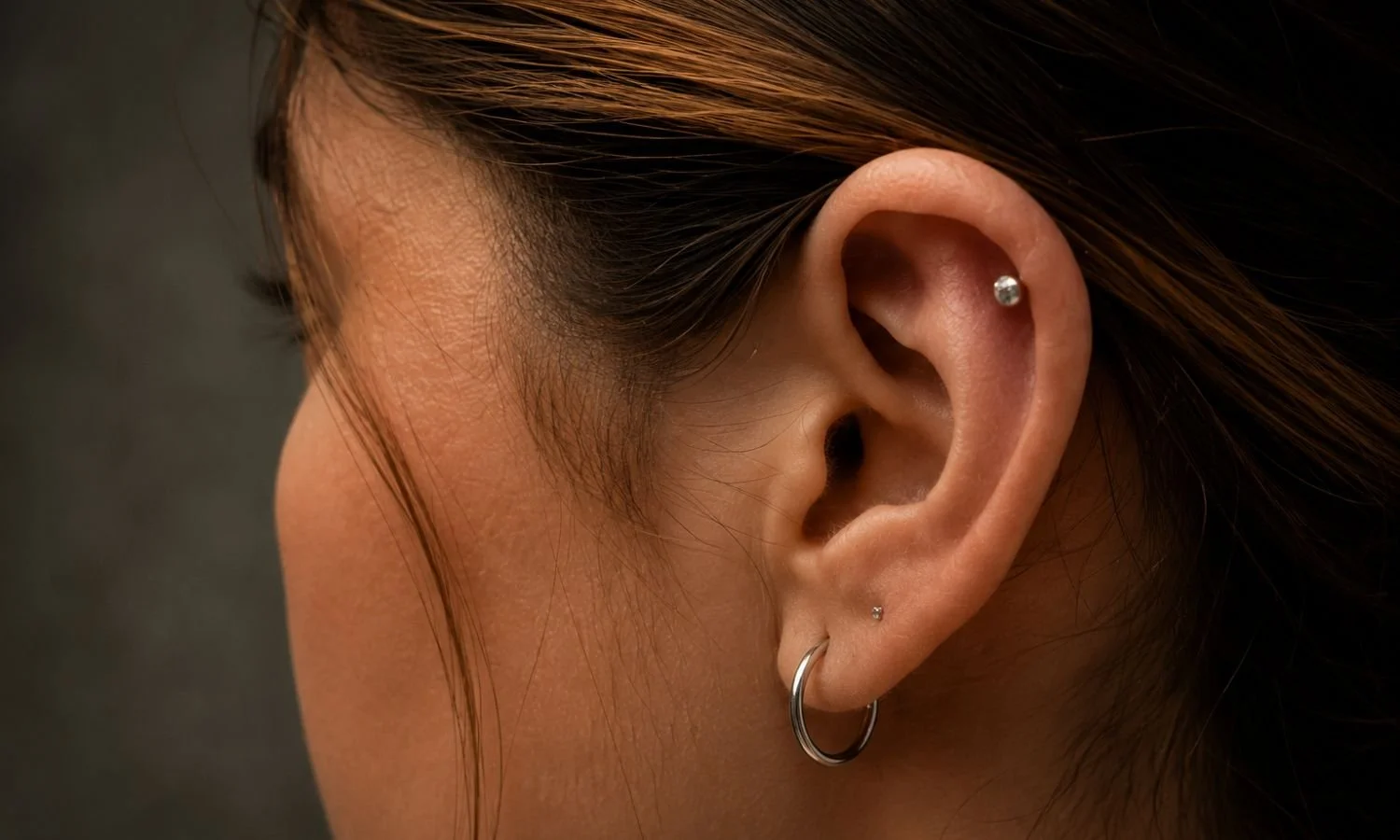
The Tragus (and Other Inner Cartilage): Bold Look, Longer Healing
The tragus is the small cartilage flap right in front of the ear canal. It's a standout placement that can look clean and minimal with a stud, or more statement-making later with different tops.
Inner cartilage piercings are often described as more pressure than sting. The bigger factor is lifestyle: inner ear placements can clash with earbuds, certain headphones, and constant touch from hair or skincare routines.
Common inner cartilage options:
Tragus: the flap in front of the canal (earbud friction is the big concern)
Conch: the bowl of the ear (great for a center-piece look and clean symmetry)
Daith: inner fold above the canal (anatomy-dependent; not every ear has the same fold depth)
Who inner cartilage is best for: clients who want a bold, ''designed'' look, and who can protect the piercing from pressure and constant contact for months.
Plan ahead before you choose tragus or daith: If you're in earbuds all day, switching to over-ear headphones during early healing can save you a lot of irritation. And if you're doing a conch, we'll talk about how your headphones sit so you're not compressing the jewelry for hours.
Small details that make inner cartilage heal better:
Choose stable jewelry with the right post length for swelling.
Keep hair and skincare products from building up around the site.
Don't test it with earbuds ''just for a minute.'' That minute can set you back.
These placements can look incredible-just don't rush them. Cartilage rewards patience.
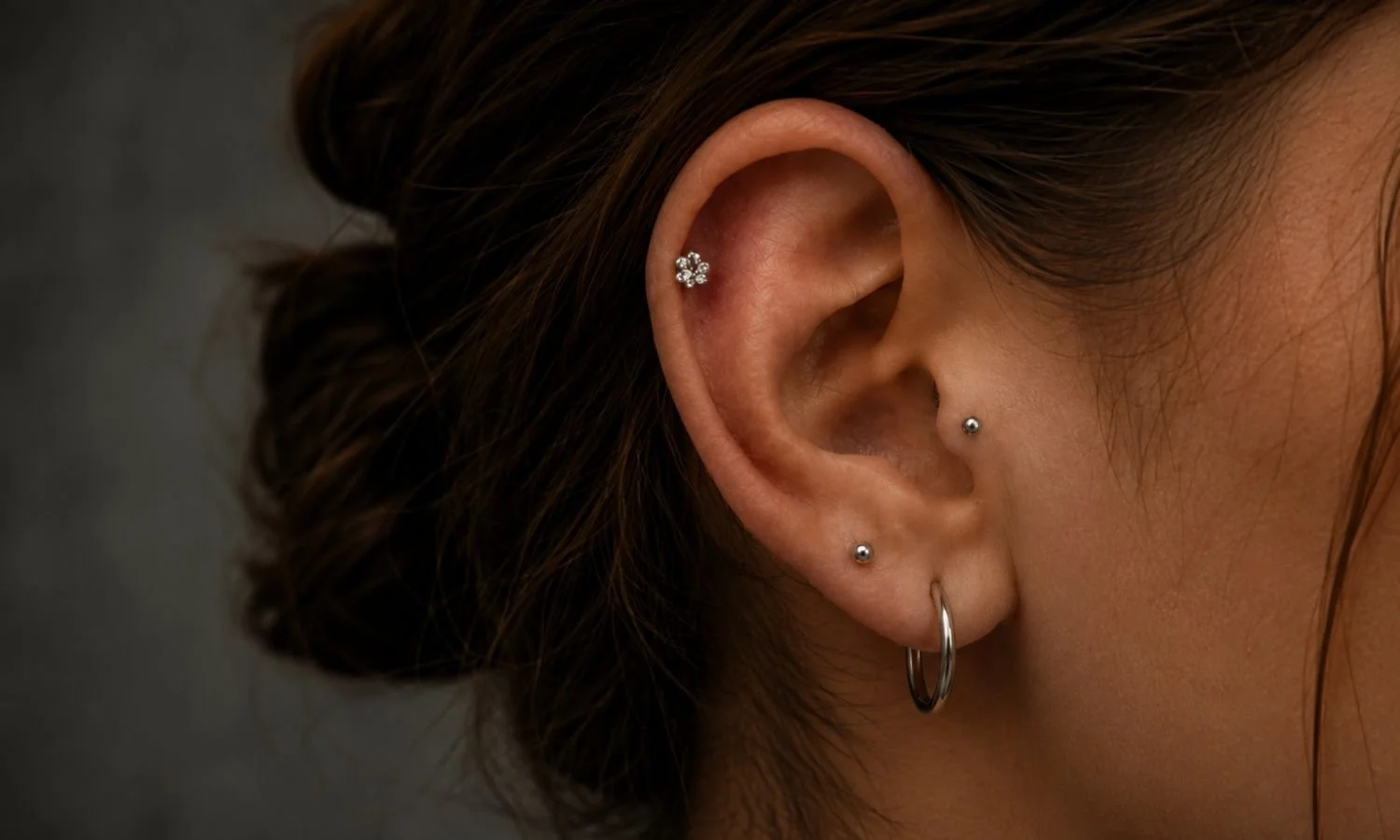
Match the Piercing to Your Ear Anatomy (So It Looks Right and Heals Right)
Social media is great for ideas. But your ear anatomy decides what will look balanced-and what will heal smoothly.
Professional piercers look at things like ridge depth, flat zones, and how jewelry will sit once swelling goes down. A piece that looks perfect on a wide, open ear can feel crowded (and heal poorly) on a tighter fold or smaller ear.
What we're checking during a consultation:
Spacing: will your jewelry sit cleanly without stacking on top of itself?
Angle: will the post/stone sit straight and stay comfortable long term?
Skin tension: is the area likely to swell tight (which can cause pressure and irritation)?
Your goals: do you want one piercing, or a curated plan you can build on?
If you want a curated ear: we map it like a design-an anchor piece (often lobe or conch), a couple of mid-size accents, and small details that add shine without cluttering the ear. And we plan it in phases so you're not trying to heal three irritated cartilage piercings at once.
Good curation is wearable. It should look great in photos, but also feel comfortable when you're driving, working, wearing headphones, and sleeping.
Pain + Healing Timelines: What to Expect (and What's Normal)
Here's the big truth: cartilage takes longer because it has less blood flow than the lobe. The piercing appointment is fast, but the healing timeline is where people get impatient.
Typical healing timelines:
Lobes: ~6-18 weeks
Helix (outer cartilage): ~4-16+ months
Tragus / conch (inner cartilage): ~6-12 months
What's normal early on: mild swelling, tenderness, warmth, light crusting, and ''awareness'' when you bump it. What usually causes setbacks is constant pressure (sleeping on it), snagging, over-cleaning, or changing jewelry too early.
One of the most common problems is the ''fake-out'': the outside looks calm, but the inside is still healing. That's why changing jewelry too early often causes swelling, bumps, or a setback.
When to check in with a professional: worsening redness that spreads, significant heat, thick yellow/green drainage, fever, or pain that escalates instead of gradually improving. If something feels off, don't guess. Contact us and get eyes on it.
Jewelry That Heals Best (and What to Avoid)
Healing is easier when your jewelry is body-friendly and designed for long-term wear. Cheap metals and poorly fitting jewelry are two of the fastest ways to turn a fresh piercing into an irritated one.
Best starter metal: implant-grade titanium (highly biocompatible and a top choice for sensitive skin)
Great option (when appropriate): solid gold from reputable manufacturers (not plated)
Best starter style: flat-back labret studs (less snagging, cleaner, more comfortable for sleeping)
Avoid: mystery metals, cheap plated jewelry, and butterfly backs while healing
Fit matters as much as metal. Jewelry that's too short can create pressure as you swell. Jewelry that's too long can move too much and irritate the channel. A professional piercer sizes your jewelry to your anatomy and the location, then can downsize later when swelling reduces.
One more detail most people miss: downsizing is part of the plan. As swelling goes down, a properly timed downsize reduces movement-and movement is one of the biggest causes of irritation bumps.
The Southern Tattoo Society Piercing Process (Consultation to Placement)
If you've only seen kiosk piercings, a professional studio experience feels completely different. It's cleaner, more controlled, and built around long-term results-not rushing you through a line.
Here's what a clean, expert process looks like at Southern Tattoo Society:
Consultation + anatomy check: we look at your ear shape, spacing, and what you're trying to build long-term.
Placement mapping: we mark the spot, check it from multiple angles, and adjust until it fits your ear and your style.
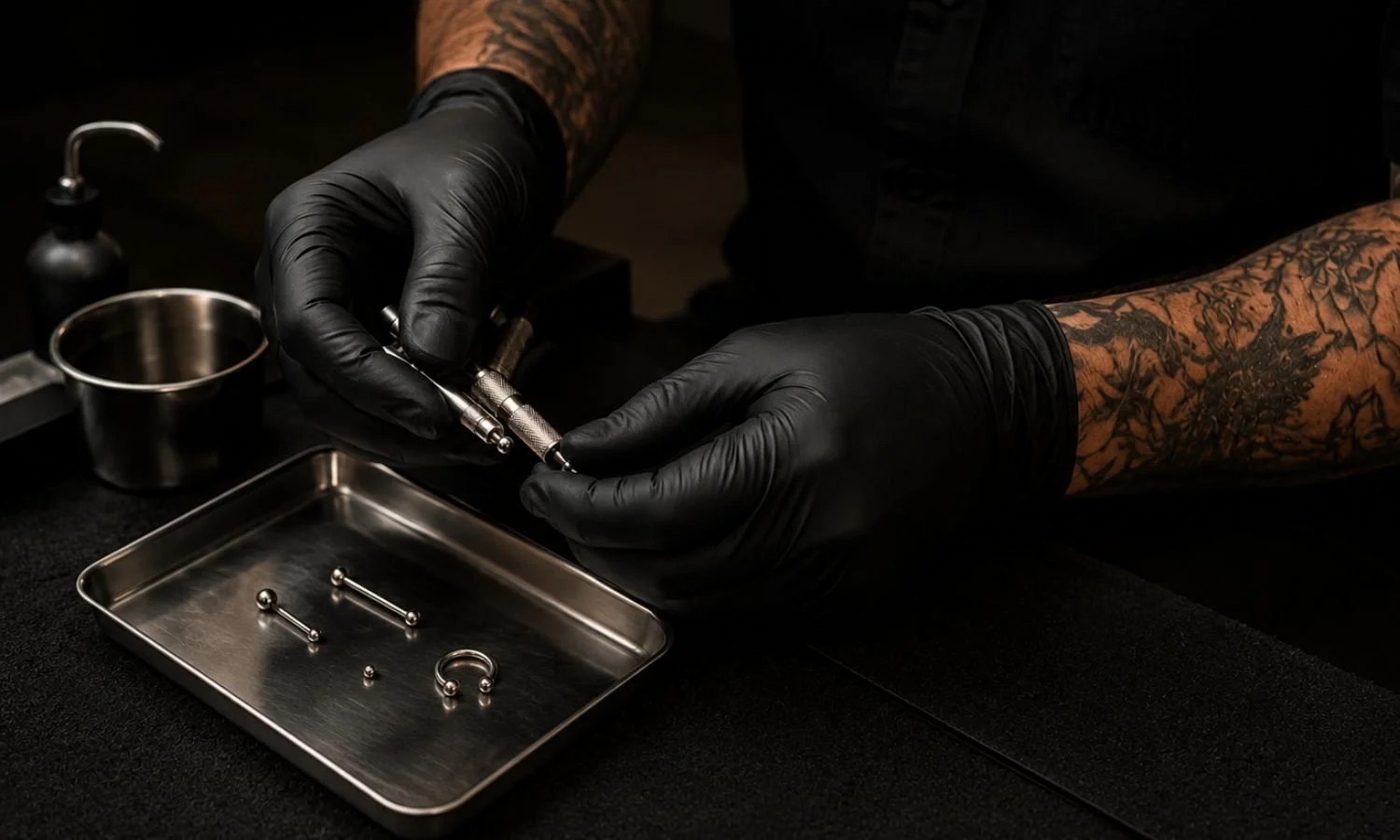
Sterile setup: single-use needles, clean station, and professional standards-no shortcuts.
Jewelry selection: we choose the right size and style to allow for swelling and smooth healing.
Aftercare plan: you leave knowing exactly what to do (and what not to do).
First-time clients: we'll slow the process down and walk you through everything.
Experienced clients: we can plan multi-step ear curation so your next piercing fits what you already have and where you want to go next.
Aftercare That Prevents Bumps and Irritation
Aftercare doesn't need to be complicated. It needs to be consistent.
Your daily baseline:
Clean with sterile saline (spray or soak) 112x per day.
Hands off: touching introduces bacteria and causes swelling.
Don't twist or ''spin'' the jewelry. That re-irritates the healing channel.
Avoid harsh chemicals like alcohol, peroxide, or ointments unless you're specifically instructed.
Protect from pressure: be mindful with side-sleeping, helmets, and hair snagging.
Two of the biggest aftercare mistakes we see:
Over-cleaning: scrubbing, picking crust, or using multiple products daily can keep the piercing inflamed.
Constant pressure: sleeping on cartilage piercings is a fast track to irritation bumps.
What to do if you feel a bump coming on: don't pop it, don't crush it, and don't start experimenting with random products. Keep it clean with sterile saline, remove pressure, and get professional guidance if it doesn't calm down.
If you like having everything spelled out before you book, check our piercing FAQs. And if you ever see unusual swelling, heat, or drainage, don't guess-reach out to a professional.
Why San Antonio Clients Choose Southern Tattoo Society
Southern Tattoo Society is a locally owned tattoo and piercing studio in San Antonio, built on clean work, solid technique, and respect for the craft. Our team brings 23+ years of experience, and the studio is known for clean, sterile practices and high-quality work.
We're not just a piercing counter-we're a full studio where design and detail matter. Alongside professional body piercing, we specialize in:
Custom Tattoos
Fine Line Tattoos
Black & Gray Tattoos
Japanese Traditional
Neo-Traditional
American Traditional
Watercolor & Color Illustrative
That matters because curation is design. Whether you're planning a clean, minimal ear stack or you want bolder placements, we approach it the same way we approach tattooing: with intention, precision, and respect for the long game.
Schedule Your Piercing Appointment
If you're ready to choose the right placement and get it done the professional way, book your visit with Southern Tattoo Society. Whether it's your first piercing or you're upgrading your ear stack, you'll get clean technique, quality jewelry, and straightforward aftercare guidance from a trusted local team.
Southern Tattoo SocietyAddress: 7327 N Loop 1604 W #101A, San Antonio, TX 78249
Phone: (210) 996-0937
Booking link:https://www.southerntattoosociety.com/piercings
Questions?Contact us here
If you've been comparing options for ear piercings San Antonio, come see what a professional studio experience feels like-clean, precise, and built around your style.